
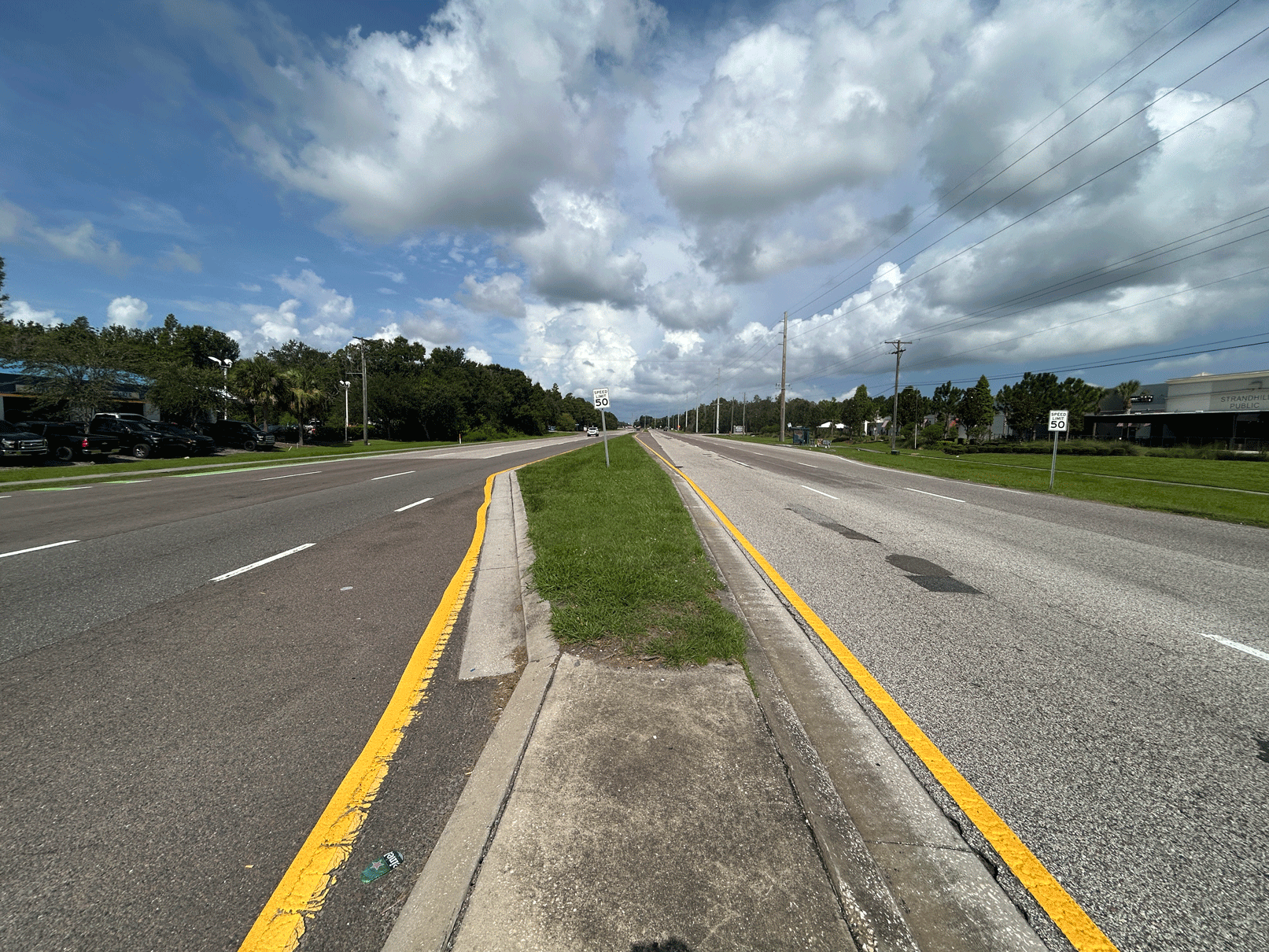
Tampa’s roads carry more than just cars. They carry commuters heading to work, families driving to school, delivery trucks keeping local businesses running, and cyclists trying to get across town safely. Behind every smooth stretch of pavement and every well-timed intersection is a process most drivers never think about: roadway engineering.
As Florida continues to grow, so does the demand for reliable transportation infrastructure. Whether it’s resurfacing an aging four-lane roadway or redesigning a busy intersection to reduce collisions, roadway engineering plays a direct role in how safely and efficiently people move through their communities. This guide breaks down what roadway engineering actually involves, why it matters for Tampa specifically, and what to look for when choosing an engineering partner for your next infrastructure project.
What does a roadway engineer actually do?
A roadway engineer designs and evaluates the physical and functional elements of a road, including pavement structure, lane configuration, signage, drainage, and safety features. Their work spans the full lifecycle of a project, from initial planning and design through construction support and long-term maintenance recommendations.
Roadway engineering isn’t limited to drawing lines on a map. It requires balancing multiple priorities at once: traffic flow, pedestrian and cyclist safety, environmental regulations, budget constraints, and the practical realities of construction. A well-designed roadway accounts for how people actually use it, not just how traffic engineers imagine it should be used.
At Bayer United Engineering & Consulting (BUEC), roadway engineering is treated as a core service area. The firm’s team supports roadway design, rehabilitation, and safety enhancements across Florida, with a focus on practical solutions that improve traffic flow and accessibility.
Why does roadway engineering matter for Tampa’s infrastructure?
Tampa’s transportation network faces pressure from rapid population growth, aging infrastructure, and increasing traffic volume. Roads that were designed decades ago often weren’t built to handle today’s mix of vehicles, cyclists, and pedestrians. That gap creates safety risks and inefficiencies that only thoughtful engineering can resolve.
Roadway engineering directly improves road safety in Tampa by identifying design changes that reduce collision risk, from resurfacing worn pavement to widening shoulders for bicycles. It also supports smoother project delivery for public agencies like the Florida Department of Transportation (FDOT), which relies on qualified engineering firms to plan and execute infrastructure improvements throughout the state.
For a fast-growing metro area, roadway engineering isn’t a nice-to-have. It’s the foundation that determines whether infrastructure keeps pace with demand or falls further behind it.
What services fall under civil engineering for transportation projects?
Roadway engineering is one piece of a larger set of civil engineering services that transportation projects typically require. A full-service civil engineer in Tampa often provides the following:
- Roadway Engineering: Design, rehabilitation, and safety improvements for roads and highways, including pavement design and lane reconfiguration.
- Drainage Engineering: Stormwater management and drainage planning to protect roadways from water damage and support long-term durability.
- 3D Modeling Civil Engineering: Digital modeling tools that help visualize project concepts, coordinate designs, and catch potential issues before construction begins.
- Maintenance of Traffic Analysis: Planning for the safe movement of vehicles and pedestrians during construction, minimizing disruption and risk.
- Project Management: Coordination of schedules, requirements, and communication across the life of a project, ensuring designs translate into successful builds.
BUEC provides each of these services as part of its comprehensive civil engineering design offering, giving clients a single point of contact for projects that touch multiple disciplines.
How does roadway engineering improve safety at busy Florida intersections?
Busy intersections are where roadway design decisions matter most. High traffic volume, mixed vehicle types, and pedestrian activity all converge in a small physical space, which is why intersections account for a disproportionate share of traffic incidents nationwide.
Improving safety at busy Florida intersections typically involves a combination of strategies: adjusting signal timing, improving sightlines, adding turn lanes, upgrading crosswalks, and reconsidering roadway geometry. Engineers evaluate traffic patterns, accident history, and accessibility needs before recommending changes, since a fix that works for one intersection may not work for another.
This is where experience matters. A transportation engineering firm that has worked across multiple Florida communities brings pattern recognition to the table. Recommendation frameworks help too. For example, choose a roundabout redesign if intersection delay and low-speed collisions are the primary concern, but choose signal retiming if the issue is congestion during specific peak hours rather than crash frequency.
What does a pavement preservation or resurfacing project involve?
Pavement preservation projects extend the life of existing roadways before they deteriorate to the point of requiring full reconstruction, which is significantly more expensive. A typical pavement preservation project includes milling the existing road surface, resurfacing with new pavement, and making targeted improvements to drainage, sidewalks, and bicycle accommodations.
One example of this work: a project involving the milling and resurfacing of a 1.8-mile stretch of existing four-lane divided rural roadway and a separate four-lane suburban roadway. Projects like this demonstrate how resurfacing work often expands beyond simple pavement replacement to include broader safety and accessibility upgrades.
A related project type is roadway and development corridor work, such as improvements to an airport-area development road. These projects commonly involve milling and resurfacing the roadway, widening for bicycles, improving pedestrian and vehicle safety, and upgrading sidewalks and drainage systems. This kind of multi-element scope reflects how modern roadway projects rarely address just one issue. They tend to bundle safety, accessibility, and infrastructure durability into a single coordinated effort.
What should you look for in a Tampa engineering firm?
Not all Tampa engineering firms offer the same combination of technical capability and client service. When evaluating a potential engineering partner, a few factors matter most.
Responsiveness. Infrastructure projects move on tight timelines, especially when working with public agencies. A firm that answers questions quickly and communicates proactively reduces delays and prevents small issues from becoming costly ones.
Practical, creative problem-solving. Every roadway or drainage challenge has more than one possible solution. The right firm should be able to offer options that balance cost, constructability, and long-term performance rather than defaulting to the most conservative or most expensive approach.
Quality of work product. Design accuracy affects everything downstream, from permitting to construction to long-term maintenance costs. High-quality deliverables reduce rework and keep projects on schedule.
Administrative ease. Accurate, hassle-free invoicing and clear project documentation might not seem like engineering criteria, but they directly affect how smoothly a project runs for the client managing it.
Relevant prequalifications. For public sector work, particularly FDOT projects, a firm’s prequalifications determine which project types it’s eligible to bid on. Confirming a firm’s credentials upfront avoids surprises later.
BUEC positions itself around these exact priorities, describing its approach as combining a “Balanced” methodology with “United” team experience to deliver excellence and improve safety on Florida’s roadways. The firm’s involvement in FDOT’s Small Business Program also reflects a specific focus on being a dependable partner for agencies and prime contractors seeking qualified transportation engineering support.
Why does firm culture matter for engineering partnerships?
Technical skill is table stakes for any engineering firm. What often separates a good project experience from a difficult one is how a team works together and communicates with clients.
Firms that invest in team culture, through community involvement, internal collaboration, and a genuine sense of camaraderie, tend to bring that same energy to client relationships. BUEC, for instance, organizes quarterly volunteer events ranging from beach cleanups to food bank support, reflecting a broader commitment to giving back to the Tampa community it serves. That community-oriented mindset often translates into how a firm approaches client projects: with attentiveness, care, and a collaborative spirit rather than a transactional one.
Getting started on your next roadway or infrastructure project
Roadway engineering shapes daily life in ways that are easy to overlook until something goes wrong: a pothole that damages a car, an intersection with a history of near-misses, a drainage system that floods during heavy rain. Investing in thoughtful, experienced engineering upfront prevents these problems and builds infrastructure that serves communities well for decades.
If you have a roadway, drainage, or maintenance of traffic project on the horizon, working with an experienced civil engineering team can make the difference between a project that stalls and one that moves smoothly from concept to completion. Contact Bayer United Engineering & Consulting to discuss your next civil or transportation engineering project in Tampa and throughout Florida.
Frequently asked questions
What is the difference between roadway engineering and transportation engineering?
Roadway engineering focuses specifically on the physical design of roads, including pavement, drainage, and geometry. Transportation engineering is a broader discipline that also considers traffic operations, safety analysis, and how different modes of travel (vehicles, pedestrians, cyclists) interact across an entire network.
How long does a typical roadway resurfacing project take?
Timelines vary based on project scope, roadway length, and coordination requirements with local agencies. A milling and resurfacing project spanning a mile or two of roadway, including drainage and sidewalk improvements, often takes several months from design through construction, though exact timelines depend on permitting and construction scheduling.
Who typically manages roadway engineering projects in Florida?
Public roadway projects are often managed in partnership with the Florida Department of Transportation (FDOT), which sets design standards and, for smaller firms, offers programs like the Small Business Program to encourage participation from qualified transportation engineering firms.
Do I need a separate firm for drainage and roadway design?
Not necessarily. Many civil engineering firms, including BUEC, offer both roadway and drainage engineering under one roof. This can simplify project coordination since drainage and roadway design decisions often affect one another.
What makes an engineering firm qualified for FDOT projects?
Qualification typically depends on a firm’s prequalifications, which are credentials verifying technical competency in specific project types. Firms pursuing FDOT work should confirm which prequalification categories they hold before bidding on public transportation projects.